Sunday, May 17, 2015

E. Africa Rangers Go High-tech Against Poachers

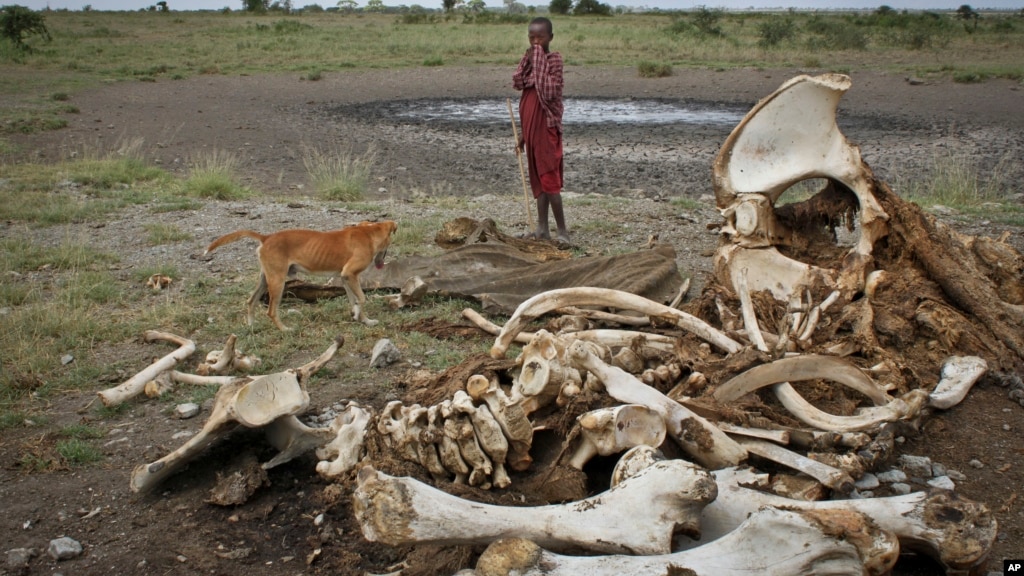
FILE - A Maasai boy and his dog stand near the skeleton of an elephant killed by poachers outside of Arusha, Tanzania.


Conservationists struggling to track down and prosecute poachers hunting for rhino horn, ivory and bush meat are turning to new technologies like DNA identification and surveillance drones to give them an edge in the war on poaching.

Africa’s fight against poaching is often described as a war. The slaughter is on the rise, fueled by growing Asian demand for ivory and rhino horn. Experts estimate more than 35,000 African elephants are killed every year. Rhino poaching is thought to have reached record levels.

Faced with such formidable foes, African conservationists no longer rely on simple foot patrols. This is a modern war and it is becoming increasingly high-tech.

Several weeks ago, a small white airplane, the DT26, took to the skies over the Selous Game Reserve in Tanzania. The plane is an unmanned aerial vehicle, or drone, and its designers hope it will soon be used to catch poachers.

Mike Chambers runs Bathawk Recon, the company that made the drone. He said right now, Tanzania’s embattled rangers do not have the resources to even keep up with poachers.

“With a quarter of a million square kilometers of protected area, it’s impossible with the budget that Tanzania has to cover that area effectively," he said. "Resources available to rangers just aren’t going to be able to do it, especially at the moment, where the resources for poachers are rising because of the international demand.”

His drones, he said, can patrol vast swathes of territory that would be otherwise impossible to monitor. It is a technological solution that lets manpower be deployed more effectively. He hopes it will give park authorities the upper hand.

“Drones give a multiplier effect to rangers," he said. "If we can cover four or five thousand square kilometers with a pod of drones, then fewer rangers are needed to cover that area because they can be organized as a reaction force, and go where we have found the incidents to be occurring.”

In neighboring Kenya, the wildlife service is focusing on cutting edge genetics to strengthen legal cases against poachers. Earlier this month, they opened a forensics and genetics lab in Nairobi, where suspected bushmeat can be identified.

Philip Muruthi of the African Wildlife Foundation said along with ivory poaching, illegal bushmeat hunting is also cutting into Kenya’s wildlife population, but until now prosecuting perpetrators has been difficult. Poachers often claim giraffe or zebra meat is beef, said Muruthi, and it can be hard to prove otherwise.

“Often law enforcers in the wildlife area lose their cases because they cannot authenticate," he said. "They can’t prove in a court of law that that which they are using as an exhibit is actually prohibited wildlife material.”

The new lab should be able to tell the difference. But Muruthi said it will also build a genetic database of Kenya’s endangered animals that should help prosecute ivory and rhino horn poachers as well.

“When you find samples from anywhere in the world you can take those samples and match them to your database, and be able to say where the confiscated item comes from," he added. "So if you are trying to nail somebody in a court of law, you can say, ‘well, this is something that you are trafficking illegally.’”

Conservationists point out that technology is only as good as the people behind it, and that Africa’s endangered animals still depend on the political will to protect them — which, they say, is sometimes lacking.

If this war is to be won, it will take the best tools available.

E. Africa Rangers Go High-tech Against Poachers

FILE - A Maasai boy and his dog stand near the skeleton of an elephant killed by poachers outside of Arusha, Tanzania.


Conservationists struggling to track down and prosecute poachers hunting for rhino horn, ivory and bush meat are turning to new technologies like DNA identification and surveillance drones to give them an edge in the war on poaching.

Africa’s fight against poaching is often described as a war. The slaughter is on the rise, fueled by growing Asian demand for ivory and rhino horn. Experts estimate more than 35,000 African elephants are killed every year. Rhino poaching is thought to have reached record levels.

Faced with such formidable foes, African conservationists no longer rely on simple foot patrols. This is a modern war and it is becoming increasingly high-tech.

Several weeks ago, a small white airplane, the DT26, took to the skies over the Selous Game Reserve in Tanzania. The plane is an unmanned aerial vehicle, or drone, and its designers hope it will soon be used to catch poachers.

Mike Chambers runs Bathawk Recon, the company that made the drone. He said right now, Tanzania’s embattled rangers do not have the resources to even keep up with poachers.

“With a quarter of a million square kilometers of protected area, it’s impossible with the budget that Tanzania has to cover that area effectively," he said. "Resources available to rangers just aren’t going to be able to do it, especially at the moment, where the resources for poachers are rising because of the international demand.”

His drones, he said, can patrol vast swathes of territory that would be otherwise impossible to monitor. It is a technological solution that lets manpower be deployed more effectively. He hopes it will give park authorities the upper hand.

“Drones give a multiplier effect to rangers," he said. "If we can cover four or five thousand square kilometers with a pod of drones, then fewer rangers are needed to cover that area because they can be organized as a reaction force, and go where we have found the incidents to be occurring.”

In neighboring Kenya, the wildlife service is focusing on cutting edge genetics to strengthen legal cases against poachers. Earlier this month, they opened a forensics and genetics lab in Nairobi, where suspected bushmeat can be identified.

Philip Muruthi of the African Wildlife Foundation said along with ivory poaching, illegal bushmeat hunting is also cutting into Kenya’s wildlife population, but until now prosecuting perpetrators has been difficult. Poachers often claim giraffe or zebra meat is beef, said Muruthi, and it can be hard to prove otherwise.

“Often law enforcers in the wildlife area lose their cases because they cannot authenticate," he said. "They can’t prove in a court of law that that which they are using as an exhibit is actually prohibited wildlife material.”

The new lab should be able to tell the difference. But Muruthi said it will also build a genetic database of Kenya’s endangered animals that should help prosecute ivory and rhino horn poachers as well.

“When you find samples from anywhere in the world you can take those samples and match them to your database, and be able to say where the confiscated item comes from," he added. "So if you are trying to nail somebody in a court of law, you can say, ‘well, this is something that you are trafficking illegally.’”

Conservationists point out that technology is only as good as the people behind it, and that Africa’s endangered animals still depend on the political will to protect them — which, they say, is sometimes lacking.

If this war is to be won, it will take the best tools available.

EUROPE'S GATEKEEPER

The sun sets slowly over the Mediterranean and, leaning on a small fishing boat, Giusy Nicolini looks nervously at the horizon. She is not waiting for a ship to appear; rather, she hopes that none will. “We live in a constant state of fear here,” she says. “I never thought, when I took this job, that I would have to count so many bodies.”

Nicolini is the mayor of Lampedusa, a quaint little island at the southernmost tip of Italy that has become the front line of Europe’s war on migration. In October 2013, more than 360 would-be immigrants died trying to reach Lampedusa, and the deathly tide hasn’t stopped: Thousands of people have drowned in the surrounding waters since, including the 800 men, women and children who died in April when their ship capsized.

Just 70 miles from Tunisia and less than 200 from Tripoli, Libya, Lampedusa has long been a life raft for migrants trying to reach Europe. But in recent years, the numbers of would-be migrants has surged, as poverty and instability escalate in the Horn of Africa, the crisis in Syria worsens and Libya, once a kind of refuge, itself descends into chaos. During the first four months of this year, 40,000 people crossed the Mediterranean, according to the United Nations High Commissioner for Refugees (UNHCR) — almost four times as many as in all of 2012, the year Nicolini became mayor. In response to the surge, Malta has cut back on rescue operations, while Spain has erected miles of fence.

It’s here that Lampedusa’s mayor has made her stand. Even as her European coastal counterparts have scrapped lifesaving programs in favor of closed borders, Nicolini has pushed hard for a more compassionate, humanitarian approach. Not only does she welcome the migrants to the island, but she also demands that more be done for them — including, for example, establishing humanitarian corridors that would make their passage safe. “The thing with human rights is you can’t make exceptions,” she says. “We Europeans can’t expect to have ours respected until we acknowledge theirs.”

In saying this, Nicolini has made herself a continental lightning rod. The EU is based on the idea of free movement of people, goods and currency within Europe’s borders, but many have grown queasy about opening the gates to others. Generally, the rule is that the farther north you go, the queasier the Europeans get. Germany, for instance, recently witnessed huge protests against immigration, and even in Sweden, the anti-immigration party is fast gaining political momentum. Italy’s Prime Minister Matteo Renzi, on the other hand, has advocated more spending on search and rescue and for better coordination of asylum provision.


An aerial view of Lampedusa, Italy.

Source: Getty

Even as Nicolini helps define the European debate on immigration — and wins accolades from Amnesty International and the pope — her future on Lampedusa is uncertain. Some residents accuse her of turning their 8-square-mile island into a free port for migrants. Lampedusa can’t afford it, they say: It needs toINVEST in things that pay off, like tourism, instead of devoting its resources to refugees.

But today Nicolini is not on Lampedusa. She is on Linosa, an even smaller island where she is also mayor. She’s been stranded for three days: This patch of cacti and volcanic rock has no airport, and boats will not make the passage back to Lampedusa if there is too much wind. She does not mind. The enduring quiet of this sunny little seaside town reminds the 54-year-old of the Lampedusa she grew up in, before the planes full of tourists and the boatloads of immigrants began to pour in. “I am loving the forced vacation,” she says. “I am always saying I need a break and here, I have no choice.”

***

Except for a few fishermen, most of Lampedusa’s 4,500 inhabitants live off tourism. A glance at its stunning beaches and shimmering turquoise waters explains why. The way the sunlight falls on sandstone imparts something of an African feel, and closing your eyes and breathing the hot salt air, you might easily imagine yourself on the coast of Tunisia. You wouldn’t expect a humanitarian crisis here, but the black bodies regularly wash up on its pale shores, and the fishermen go out to sea every day dreading the prospect of returning with shipwreck survivors rather than sardines.

The Mediterranean is the world’s most dangerous border. Since 2000, some 23,000 people have died trying to make the crossing, and these days, some 2,500 migrants arrive on Lampedusa by the month. Just last week a boatful of migrants from Libya, who’d survived a gas tank explosion onboard, arrived, many of them badly burned. In response, Nicolini has welcomed them, sheltered them, lobbied the Italian government for them. She’s also organized more funerals than she can remember. She works all the time and systematically refuses social invitations and press visits.

That is why I’m surprised when she finally rides into the interview on a bicycle, looking pretty relaxed. Nicolini is blond, petite and modish, wearing a trenchcoat and hiding her bird-like features behind a pair of Emporio Armani sunglasses and a thick layer of makeup. She’s married but doesn’t have children, which she says is “a good thing because I haven’t had to sacrifice them to this job.” She speaks a lot and loudly, stopping only to sip espresso or pull on her cigarette.


Migrant men from Nigeria relax by the sea after taking a swim on April 22, 2015, off the coast of Lampedusa.

Source: Dan Kitwood/Getty

Nicolini grew up in the days before Lampedusa was on anyone’s radar. She’d spend carefree summers on the beach or exploring the island’s cliffs and caves with her siblings. As a leftist teen, she studied political science in Sicily, and after graduating, began to work for Lampedusa’s nature reserve. She ended up directing it for more than two decades.

When she ran for mayor in 2012, it was at her friends’ urging, she says — the island had suffered an epidemic of corrupt mayors, including one that would be sentenced to a five-year jail term — and she did not expect to win. But upon taking up the small, battered-looking city hall in 2012, Nicolini did not imagine she’d go from protecting migratory birds to migrant people.


Under her leadership, Lampedusa has become one of the Mediterranean’s most efficient migrant ports — able to process and shelter up to 700 migrants at a time (though its center has often seen as many as 2,000). She’s had to beg Rome for money to build and fix infrastructure, and she has had some success there, including a recent $22 million appropriation. She’s also won praise from human rights organizations, even the pope, as the awards that cover her office walls indicate. The UNHCR refers to “the Lampedusa model” for sheltering refugees and is trying to encourage other towns to adopt it. “The island’s administration could not do any more to help these people,” says Alessandra Romano, Lampedusa’s UNHCR representative. “It’s truly exemplary.”

Some of Lampedusa’s residents, however, hate all this — that their island’s name has become synonymous with poor huddled masses, and they resent Nicolini for it. Many feel their mayor puts the needs of the newcomers before their own — and their own needs are plenty. Unemployment is high. Infrastructure is weak: Since the island doesn’t have a maternity ward, for example, women must pay thousands of euros to give birth in Sicily. Worse, many believe that the migrant crisis will threaten the island’s biggest revenue source: tourism. “Nicolini doesn’t care about our problems,” says Salvatore Cappello, a local restaurateur who heads Lamepedusa’s businessman association. She basks in the international attention on her fight for immigrants, he says, “but what about us?” 


Indeed, outside of July and August, the town looks a bit deserted and sad, like the set of an abandoned Wild West movie. Most hotels are closed, and postcards and souvenirs gather dust in kiosks while journalists huddle on terraces awaiting the next boat. Migrants walk up and down the main street in small groups, trying to score free cigarettes or SIM cards. The island’s big yellow church is often empty, except for a few Eritreans thanking God for helping them reach Europe or mourning those they lost along the way.

Nicolini says she is trying hard to change Lampedusa’s image from a migrant destination to an unspoiled nature reserve, a place where visitors can see sea turtles laying eggs on the beach or dolphins surfing the waves, or simply lounge by the sea. She points out that TripAdvisor just named Lampedusa the third-best Italian island in its Travelers’ Choice picks. But to succeed, she says, she needs all of Europe’s help. “If Northern European countries really want to help us deal with immigration, they should send their tourists here,” she says. Nonstop humanitarian efforts require a strong economy, she says.


Mayor Giusy Nicolini.

Source: Daniel Mendez/Redux

Northern Europe, however, has other plans. After April’s record number of deaths, the EU responded inadequately, in Nicolini’s opinion. Yes, it tripled the funds for its new sea patrol mission, Operation Triton, but Nicolini points out that Triton is a border control task force, not a search and rescue one. The mayor wants the EU to restore Operation Mare Nostrum — an Italian-led yearlong search and rescue mission that saved thousands of lives in 2014.

The European Parliament has granted her an audience, but for the most part, the EU has doubled down on border control — keeping immigrants out instead of taking on a humanitarian burden and distributing it across states. The Dublin Regulation is a prime example: It states that new arrivals must seek asylum in the first country in which they register (by fingerprint), instead of where they hope to end up. The system puts a huge burden on southern countries and small nations like Malta. If migrants arrive in Italy, for example, but have family in the U.K. or Sweden, they try to escape. Some even cut their fingertips with razor blades.

Instead, Nicolini says all European countries should help to create humanitarian corridors and then distribute the newcomers among them. Right now she is designing a way to bypass some of the European red tape: a Lampedusa-led coalition of borderland locales, from Lesbos in Greece to Calais in France to Ceuta in Spain. The goal is to unite forces, share resources and lobby the European Parliament for immigration reform.

“If we don’t change, we are sentencing all these people to death,” says the environmentalist turned migrant advocate. Her voice, usually composed and stern, cracks when she speaks about the parade of pain visiting her island — the burned men who arrived last week, the shipwreck survivor who still calls for her husband in her dreams, the children whose little floating bodies are the first to be found. Nicolini sighs. “The same Mediterranean that gave birth to the European civilization is now witnessing its destruction,” she says.

***

The wind has died down and it’s time for Nicolini to return from her forced vacation. When the first glimmer of rose appears in the sky, Nicolini gets on the big rusty ferryboat. Her expression hardens as the vessel enters Lampedusa’s harbor. She is thinking of the pile of to-do’s waiting in her office. She is thinking that it’s a crucial time, what with the world’s spotlight on the immigration issue. Other countries are promising help and support, and the recent speech she gave to the European Parliament on refugee policy was much lauded.

Change may be on the horizon, but only distantly. The same boat that brings her to Lampedusa from Linosa will later today take 40 migrant minors to Sicily and then the mainland. Many of those kids will end up living in the streets of Rome or Naples, undocumented and uncared for. “Until Europe finds its humanity,” she says, “it’s just a matter of time until the next tragedy.”

Read more: Europe's Gatekeeper | Rising Stars | OZY
EUROPE'S GATEKEEPER

The sun sets slowly over the Mediterranean and, leaning on a small fishing boat, Giusy Nicolini looks nervously at the horizon. She is not waiting for a ship to appear; rather, she hopes that none will. “We live in a constant state of fear here,” she says. “I never thought, when I took this job, that I would have to count so many bodies.”

Nicolini is the mayor of Lampedusa, a quaint little island at the southernmost tip of Italy that has become the front line of Europe’s war on migration. In October 2013, more than 360 would-be immigrants died trying to reach Lampedusa, and the deathly tide hasn’t stopped: Thousands of people have drowned in the surrounding waters since, including the 800 men, women and children who died in April when their ship capsized.

Just 70 miles from Tunisia and less than 200 from Tripoli, Libya, Lampedusa has long been a life raft for migrants trying to reach Europe. But in recent years, the numbers of would-be migrants has surged, as poverty and instability escalate in the Horn of Africa, the crisis in Syria worsens and Libya, once a kind of refuge, itself descends into chaos. During the first four months of this year, 40,000 people crossed the Mediterranean, according to the United Nations High Commissioner for Refugees (UNHCR) — almost four times as many as in all of 2012, the year Nicolini became mayor. In response to the surge, Malta has cut back on rescue operations, while Spain has erected miles of fence.

It’s here that Lampedusa’s mayor has made her stand. Even as her European coastal counterparts have scrapped lifesaving programs in favor of closed borders, Nicolini has pushed hard for a more compassionate, humanitarian approach. Not only does she welcome the migrants to the island, but she also demands that more be done for them — including, for example, establishing humanitarian corridors that would make their passage safe. “The thing with human rights is you can’t make exceptions,” she says. “We Europeans can’t expect to have ours respected until we acknowledge theirs.”

In saying this, Nicolini has made herself a continental lightning rod. The EU is based on the idea of free movement of people, goods and currency within Europe’s borders, but many have grown queasy about opening the gates to others. Generally, the rule is that the farther north you go, the queasier the Europeans get. Germany, for instance, recently witnessed huge protests against immigration, and even in Sweden, the anti-immigration party is fast gaining political momentum. Italy’s Prime Minister Matteo Renzi, on the other hand, has advocated more spending on search and rescue and for better coordination of asylum provision.


An aerial view of Lampedusa, Italy.

Source: Getty

Even as Nicolini helps define the European debate on immigration — and wins accolades from Amnesty International and the pope — her future on Lampedusa is uncertain. Some residents accuse her of turning their 8-square-mile island into a free port for migrants. Lampedusa can’t afford it, they say: It needs toINVEST in things that pay off, like tourism, instead of devoting its resources to refugees.

But today Nicolini is not on Lampedusa. She is on Linosa, an even smaller island where she is also mayor. She’s been stranded for three days: This patch of cacti and volcanic rock has no airport, and boats will not make the passage back to Lampedusa if there is too much wind. She does not mind. The enduring quiet of this sunny little seaside town reminds the 54-year-old of the Lampedusa she grew up in, before the planes full of tourists and the boatloads of immigrants began to pour in. “I am loving the forced vacation,” she says. “I am always saying I need a break and here, I have no choice.”

***

Except for a few fishermen, most of Lampedusa’s 4,500 inhabitants live off tourism. A glance at its stunning beaches and shimmering turquoise waters explains why. The way the sunlight falls on sandstone imparts something of an African feel, and closing your eyes and breathing the hot salt air, you might easily imagine yourself on the coast of Tunisia. You wouldn’t expect a humanitarian crisis here, but the black bodies regularly wash up on its pale shores, and the fishermen go out to sea every day dreading the prospect of returning with shipwreck survivors rather than sardines.

The Mediterranean is the world’s most dangerous border. Since 2000, some 23,000 people have died trying to make the crossing, and these days, some 2,500 migrants arrive on Lampedusa by the month. Just last week a boatful of migrants from Libya, who’d survived a gas tank explosion onboard, arrived, many of them badly burned. In response, Nicolini has welcomed them, sheltered them, lobbied the Italian government for them. She’s also organized more funerals than she can remember. She works all the time and systematically refuses social invitations and press visits.

That is why I’m surprised when she finally rides into the interview on a bicycle, looking pretty relaxed. Nicolini is blond, petite and modish, wearing a trenchcoat and hiding her bird-like features behind a pair of Emporio Armani sunglasses and a thick layer of makeup. She’s married but doesn’t have children, which she says is “a good thing because I haven’t had to sacrifice them to this job.” She speaks a lot and loudly, stopping only to sip espresso or pull on her cigarette.


Migrant men from Nigeria relax by the sea after taking a swim on April 22, 2015, off the coast of Lampedusa.

Source: Dan Kitwood/Getty

Nicolini grew up in the days before Lampedusa was on anyone’s radar. She’d spend carefree summers on the beach or exploring the island’s cliffs and caves with her siblings. As a leftist teen, she studied political science in Sicily, and after graduating, began to work for Lampedusa’s nature reserve. She ended up directing it for more than two decades.

When she ran for mayor in 2012, it was at her friends’ urging, she says — the island had suffered an epidemic of corrupt mayors, including one that would be sentenced to a five-year jail term — and she did not expect to win. But upon taking up the small, battered-looking city hall in 2012, Nicolini did not imagine she’d go from protecting migratory birds to migrant people.


Under her leadership, Lampedusa has become one of the Mediterranean’s most efficient migrant ports — able to process and shelter up to 700 migrants at a time (though its center has often seen as many as 2,000). She’s had to beg Rome for money to build and fix infrastructure, and she has had some success there, including a recent $22 million appropriation. She’s also won praise from human rights organizations, even the pope, as the awards that cover her office walls indicate. The UNHCR refers to “the Lampedusa model” for sheltering refugees and is trying to encourage other towns to adopt it. “The island’s administration could not do any more to help these people,” says Alessandra Romano, Lampedusa’s UNHCR representative. “It’s truly exemplary.”

Some of Lampedusa’s residents, however, hate all this — that their island’s name has become synonymous with poor huddled masses, and they resent Nicolini for it. Many feel their mayor puts the needs of the newcomers before their own — and their own needs are plenty. Unemployment is high. Infrastructure is weak: Since the island doesn’t have a maternity ward, for example, women must pay thousands of euros to give birth in Sicily. Worse, many believe that the migrant crisis will threaten the island’s biggest revenue source: tourism. “Nicolini doesn’t care about our problems,” says Salvatore Cappello, a local restaurateur who heads Lamepedusa’s businessman association. She basks in the international attention on her fight for immigrants, he says, “but what about us?” 


Indeed, outside of July and August, the town looks a bit deserted and sad, like the set of an abandoned Wild West movie. Most hotels are closed, and postcards and souvenirs gather dust in kiosks while journalists huddle on terraces awaiting the next boat. Migrants walk up and down the main street in small groups, trying to score free cigarettes or SIM cards. The island’s big yellow church is often empty, except for a few Eritreans thanking God for helping them reach Europe or mourning those they lost along the way.

Nicolini says she is trying hard to change Lampedusa’s image from a migrant destination to an unspoiled nature reserve, a place where visitors can see sea turtles laying eggs on the beach or dolphins surfing the waves, or simply lounge by the sea. She points out that TripAdvisor just named Lampedusa the third-best Italian island in its Travelers’ Choice picks. But to succeed, she says, she needs all of Europe’s help. “If Northern European countries really want to help us deal with immigration, they should send their tourists here,” she says. Nonstop humanitarian efforts require a strong economy, she says.


Mayor Giusy Nicolini.

Source: Daniel Mendez/Redux

Northern Europe, however, has other plans. After April’s record number of deaths, the EU responded inadequately, in Nicolini’s opinion. Yes, it tripled the funds for its new sea patrol mission, Operation Triton, but Nicolini points out that Triton is a border control task force, not a search and rescue one. The mayor wants the EU to restore Operation Mare Nostrum — an Italian-led yearlong search and rescue mission that saved thousands of lives in 2014.

The European Parliament has granted her an audience, but for the most part, the EU has doubled down on border control — keeping immigrants out instead of taking on a humanitarian burden and distributing it across states. The Dublin Regulation is a prime example: It states that new arrivals must seek asylum in the first country in which they register (by fingerprint), instead of where they hope to end up. The system puts a huge burden on southern countries and small nations like Malta. If migrants arrive in Italy, for example, but have family in the U.K. or Sweden, they try to escape. Some even cut their fingertips with razor blades.

Instead, Nicolini says all European countries should help to create humanitarian corridors and then distribute the newcomers among them. Right now she is designing a way to bypass some of the European red tape: a Lampedusa-led coalition of borderland locales, from Lesbos in Greece to Calais in France to Ceuta in Spain. The goal is to unite forces, share resources and lobby the European Parliament for immigration reform.

“If we don’t change, we are sentencing all these people to death,” says the environmentalist turned migrant advocate. Her voice, usually composed and stern, cracks when she speaks about the parade of pain visiting her island — the burned men who arrived last week, the shipwreck survivor who still calls for her husband in her dreams, the children whose little floating bodies are the first to be found. Nicolini sighs. “The same Mediterranean that gave birth to the European civilization is now witnessing its destruction,” she says.

***

The wind has died down and it’s time for Nicolini to return from her forced vacation. When the first glimmer of rose appears in the sky, Nicolini gets on the big rusty ferryboat. Her expression hardens as the vessel enters Lampedusa’s harbor. She is thinking of the pile of to-do’s waiting in her office. She is thinking that it’s a crucial time, what with the world’s spotlight on the immigration issue. Other countries are promising help and support, and the recent speech she gave to the European Parliament on refugee policy was much lauded.

Change may be on the horizon, but only distantly. The same boat that brings her to Lampedusa from Linosa will later today take 40 migrant minors to Sicily and then the mainland. Many of those kids will end up living in the streets of Rome or Naples, undocumented and uncared for. “Until Europe finds its humanity,” she says, “it’s just a matter of time until the next tragedy.”

Read more: Europe's Gatekeeper | Rising Stars | OZY

Research and Markets: Challenges and Opportunities for the Wealth Sector in China 2015


Research and Markets: Challenges and Opportunities for the Wealth Sector in China 2015

Research and Markets: Challenges and Opportunities for the Wealth Sector in China 2015


Research and Markets: Challenges and Opportunities for the Wealth Sector in China 2015

CloudAlpaca, the FREE and Easy to Use Japanese Comic Book and Illustration Creation Software Has Been Released in English!


CloudAlpaca, the FREE and Easy to Use Japanese Comic Book and Illustration Creation Software Has Been Released in English!

CloudAlpaca, the FREE and Easy to Use Japanese Comic Book and Illustration Creation Software Has Been Released in English!


CloudAlpaca, the FREE and Easy to Use Japanese Comic Book and Illustration Creation Software Has Been Released in English!

Clinical Trial Outcomes Spotlighted at Scientific and Clinical Congress Show Favorable Results


Clinical Trial Outcomes Spotlighted at Scientific and Clinical Congress Show Favorable Results


Clinical Trial Outcomes Spotlighted at Scientific and Clinical Congress Show Favorable Results


Clinical Trial Outcomes Spotlighted at Scientific and Clinical Congress Show Favorable Results


Saturday, May 16, 2015

Living With Arthritis: Health Information Basics for You and Your Family What Is Arthritis?


Many people start to feel pain and stiffness in their bodies over time. Sometimes their hands or knees or shoulders get sore and are hard to move and may become swollen. These people may have arthritis (ar-THRY-tis). Arthritis may be caused by inflammation (in-flah-MAY-shun) of the tissue lining the joints. Some signs of inflammation include redness, heat, pain, and swelling. These problems are telling you that something is wrong.

Joints are places where two bones meet, such as your elbow or knee. Over time, in some types of arthritis but not in all, the joints involved can become severely damaged.

There are different types of arthritis. In some diseases in which arthritis occurs, other organs, such as your eyes, your chest, or your skin, can also be affected. Some people may worry that arthritis means they won’t be able to work or take care of their children and their family. Others think that you just have to accept things like arthritis.

It’s true that arthritis can be painful. But there are things you can do to feel better. This publication tells you some facts about arthritis and gives you some ideas about what to do so you can keep doing many of the things you enjoy.
What Are the Types of Arthritis?

There are several types of arthritis. The two most common ones are osteoarthritis (AH-stee-oh-ar-THRY-tis) and rheumatoid (ROO-mah-toyd) arthritis.

Osteoarthritis is the most common form of arthritis. This condition usually comes with age and most often affects the fingers, knees, and hips. Sometimes osteoarthritis follows an injury to a joint. For example, a young person might hurt his knee badly playing soccer. Or someone might fall or be injured in a car accident. Then, years after the individual’s knee has apparently healed, he might get arthritis in his knee joint.

Rheumatoid arthritis happens when the body’s own defense system doesn’t work properly. It affects joints and bones (often of the hands and feet), and may also affect internal organs and systems. You may feel sick or tired, and you may have a fever.

Another common type of arthritis, gout, is caused by crystals that build up in the joints. It usually affects the big toe, but many other joints may be affected.

Arthritis is seen with many other conditions. These include:
lupus (LOOP-us), in which the body’s defense system can harm the joints, the heart, the skin, the kidneys, and other organs
an infection that gets into a joint and destroys the cushion between the bones.

Do I Have Arthritis?

Pain is the way your body tells you that something is wrong. Most types of arthritis cause pain in your joints. You might have trouble moving around. Some kinds of arthritis can affect different parts of your body. So, along with pain in your joints, you may:
have a fever
lose weight
have trouble breathing
get a rash or itch.

These symptoms may also be signs of other illnesses.

What Can I Do?

Go see a doctor. Many people use herbs or medicines that you can buy without a prescription for pain. You should tell your doctor if you do. Only a doctor can tell if you have arthritis or a related condition and what to do about it. It’s important not to wait.

You’ll need to tell the doctor how you feel and where you hurt. The doctor will examine you and may take x rays (pictures) of your bones or joints. The x rays don’t hurt and aren’t dangerous. You may also have to give a little blood for tests that will help the doctor decide what kind of arthritis you may have.
How Will the Doctor Help?

After the doctor knows what kind of arthritis you have, he or she will talk with you about the best way to treat it. The doctor may give you a prescription for medicine that will help with the pain, stiffness, and inflammation. Health insurance or public assistance may help you pay for the medicine, doctor visits, tests, and x rays.
How Should I Use Arthritis Medicine?

Before you leave the doctor’s office, make sure you ask about the best way to take the medicine the doctor prescribes. For example, you may need to take some medicines with milk, or you may need to eat something just before or after taking them, to make sure they don’t upset your stomach.


You should also ask how often to take the medicine or to put cream on the spots that bother you. Creams might make your skin and joints feel better. Sometimes, though, they can make your skin burn or break out in a rash. If this happens, call the doctor.
What If I Still Hurt?

Sometimes you might still have pain after using your medicine. Here are some things to try:
Take a warm shower.
Do some gentle stretching exercises.
Use an ice pack on the sore area.
Rest the sore joint.

If you still hurt after using your medicine correctly and doing one or more of these things, call your doctor. Another kind of medicine might work better for you. Some people can also benefit from surgery, such as joint replacement.

You Can Feel Better!

Arthritis can damage your joints, internal organs, and skin. There are things you can do to keep the damage from getting worse. They might also make you feel better:
Try to keep your weight down. Too much weight can make your knees and hips hurt.
Exercise. Moving all of your joints will help you. The doctor or nurse can show you how to move more easily. Going for a walk every day will help, too.
Take your medicines when and how you are supposed to. They can help reduce pain and stiffness.
Try taking a warm shower in the morning.
See your doctor regularly.
Seek information that can help you.

Where Can People Find More Information About Arthritis?

National Institute of Arthritis and Musculoskeletal and Skin Diseases (NIAMS) Information Clearinghouse

National Institutes of Health 
1 AMS Circle
Bethesda, MD 20892–3675
Phone: 301-495-4484
Toll free: 877-22-NIAMS (226-4267) 
TTY: 301-565-2966
Fax: 301-718-6366
Other Resources
Arthritis Foundation

Website: www.arthritis.org
American Academy of Orthopaedic Surgeons

Website: www.aaos.org
American College of Rheumatology

Website: www.rheumatology.org
In Appreciation

Living With Arthritis: Health Information Basics for You and Your Family What Is Arthritis?


Many people start to feel pain and stiffness in their bodies over time. Sometimes their hands or knees or shoulders get sore and are hard to move and may become swollen. These people may have arthritis (ar-THRY-tis). Arthritis may be caused by inflammation (in-flah-MAY-shun) of the tissue lining the joints. Some signs of inflammation include redness, heat, pain, and swelling. These problems are telling you that something is wrong.

Joints are places where two bones meet, such as your elbow or knee. Over time, in some types of arthritis but not in all, the joints involved can become severely damaged.

There are different types of arthritis. In some diseases in which arthritis occurs, other organs, such as your eyes, your chest, or your skin, can also be affected. Some people may worry that arthritis means they won’t be able to work or take care of their children and their family. Others think that you just have to accept things like arthritis.

It’s true that arthritis can be painful. But there are things you can do to feel better. This publication tells you some facts about arthritis and gives you some ideas about what to do so you can keep doing many of the things you enjoy.
What Are the Types of Arthritis?

There are several types of arthritis. The two most common ones are osteoarthritis (AH-stee-oh-ar-THRY-tis) and rheumatoid (ROO-mah-toyd) arthritis.

Osteoarthritis is the most common form of arthritis. This condition usually comes with age and most often affects the fingers, knees, and hips. Sometimes osteoarthritis follows an injury to a joint. For example, a young person might hurt his knee badly playing soccer. Or someone might fall or be injured in a car accident. Then, years after the individual’s knee has apparently healed, he might get arthritis in his knee joint.

Rheumatoid arthritis happens when the body’s own defense system doesn’t work properly. It affects joints and bones (often of the hands and feet), and may also affect internal organs and systems. You may feel sick or tired, and you may have a fever.

Another common type of arthritis, gout, is caused by crystals that build up in the joints. It usually affects the big toe, but many other joints may be affected.

Arthritis is seen with many other conditions. These include:
lupus (LOOP-us), in which the body’s defense system can harm the joints, the heart, the skin, the kidneys, and other organs
an infection that gets into a joint and destroys the cushion between the bones.

Do I Have Arthritis?

Pain is the way your body tells you that something is wrong. Most types of arthritis cause pain in your joints. You might have trouble moving around. Some kinds of arthritis can affect different parts of your body. So, along with pain in your joints, you may:
have a fever
lose weight
have trouble breathing
get a rash or itch.

These symptoms may also be signs of other illnesses.

What Can I Do?

Go see a doctor. Many people use herbs or medicines that you can buy without a prescription for pain. You should tell your doctor if you do. Only a doctor can tell if you have arthritis or a related condition and what to do about it. It’s important not to wait.

You’ll need to tell the doctor how you feel and where you hurt. The doctor will examine you and may take x rays (pictures) of your bones or joints. The x rays don’t hurt and aren’t dangerous. You may also have to give a little blood for tests that will help the doctor decide what kind of arthritis you may have.
How Will the Doctor Help?

After the doctor knows what kind of arthritis you have, he or she will talk with you about the best way to treat it. The doctor may give you a prescription for medicine that will help with the pain, stiffness, and inflammation. Health insurance or public assistance may help you pay for the medicine, doctor visits, tests, and x rays.
How Should I Use Arthritis Medicine?

Before you leave the doctor’s office, make sure you ask about the best way to take the medicine the doctor prescribes. For example, you may need to take some medicines with milk, or you may need to eat something just before or after taking them, to make sure they don’t upset your stomach.


You should also ask how often to take the medicine or to put cream on the spots that bother you. Creams might make your skin and joints feel better. Sometimes, though, they can make your skin burn or break out in a rash. If this happens, call the doctor.
What If I Still Hurt?

Sometimes you might still have pain after using your medicine. Here are some things to try:
Take a warm shower.
Do some gentle stretching exercises.
Use an ice pack on the sore area.
Rest the sore joint.

If you still hurt after using your medicine correctly and doing one or more of these things, call your doctor. Another kind of medicine might work better for you. Some people can also benefit from surgery, such as joint replacement.

You Can Feel Better!

Arthritis can damage your joints, internal organs, and skin. There are things you can do to keep the damage from getting worse. They might also make you feel better:
Try to keep your weight down. Too much weight can make your knees and hips hurt.
Exercise. Moving all of your joints will help you. The doctor or nurse can show you how to move more easily. Going for a walk every day will help, too.
Take your medicines when and how you are supposed to. They can help reduce pain and stiffness.
Try taking a warm shower in the morning.
See your doctor regularly.
Seek information that can help you.

Where Can People Find More Information About Arthritis?

National Institute of Arthritis and Musculoskeletal and Skin Diseases (NIAMS) Information Clearinghouse

National Institutes of Health 
1 AMS Circle
Bethesda, MD 20892–3675
Phone: 301-495-4484
Toll free: 877-22-NIAMS (226-4267) 
TTY: 301-565-2966
Fax: 301-718-6366
Other Resources
Arthritis Foundation

Website: www.arthritis.org
American Academy of Orthopaedic Surgeons

Website: www.aaos.org
American College of Rheumatology

Website: www.rheumatology.org
In Appreciation

Red, Itchy Rash? Get the Skinny on Dermatitis


You’ve probably had a rash at some point or another, whether from poison ivy or the chickenpox or something more unusual. Why does your skin break out in red blotches like that? More important, is there anything you can do about it?

We often think of the skin as a barrier—it keeps the insides of our bodies in, and it keeps the outside world out. But our skin is also filled with special cells of the immune system. These cells protect the skin and body against viruses, bacteria and other threats. Whenever these cells detect a suspicious substance, they begin a chain reaction in the skin that leads toinflammation. The medical name for this reaction is dermatitis. But it’s more commonly known as a rash.

There are many different types of dermatitis, and each has a distinct set of treatments. Sometimes the skin’s immune cells react to something that directly touches the skin. Other times, the immune system flares in the skin because of a whole-body infection or illness.

The symptoms of these different types of rashes often overlap. “Itching is a common symptom for all these problems,” says Dr. Stephen I. Katz, director of NIH’s National Institute of Arthritis and Musculoskeletal and Skin Diseases. Many rashes are red, painful, and irritated. Some types of rash can also lead to blisters or patches of raw skin. While most rashes clear up fairly quickly, others are long lasting and need to be cared for over long periods of time.

Eczema, or atopic dermatitis, is a dry, red, itchy rash that affects up to 1 in 5 infants and young children. It often improves over time, although it can last into adulthood or start later in life. In this condition, the water-tight barrier between skin cells gets weak, which lets moisture out and other things in. That’s why people with atopic dermatitis have to moisturize their skin, and they’re more susceptible to skin infections.

Researchers have recently identified specific genes that are involved in maintaining the skin barrier. People with certain versions of these genes are more likely to get atopic dermatitis.

“The skin is the outermost sentinel for fighting off bacteria and noxious agents,” says Katz. “If the barrier is broken somehow, you can become more allergic to things.”

A skin allergy, or allergic contact dermatitis, produces a red, itchy rash that sometimes comes with small blisters or bumps. The rash arises when the skin comes in contact with an allergen, a usually harmless substance that the immune system attacks. Allergens trigger allergic reactions. Allergens can come from certain soaps, creams and even pets.

Your immune system might not react the first time you encounter an allergen. But over time, your immune system can become sensitive to the substance. As a result, your next contact may lead to inflammation and an allergic rash.

“The most common form of dermatitis that is seen anywhere is an allergic contact dermatitis to nickel,” says Katz. “Why? Because of ear piercing.” Many inexpensive earrings are made of nickel, and over time, wearing nickel earrings can cause an allergic reaction to the metal.

Other common causes of allergic dermatitis are poison oak and poison ivy. The stems and leaves of these plants produce a chemical that’s likely to cause allergies. If you touch one of them, wash your skin as soon as possible. The chemical can also remain in clothing for a long time, so it’s important to wash any clothes or shoes—or even pets—that come into contact with these plants.

Mild cases of allergic contact dermatitis usually disappear after a few days or weeks. But if the rash persists, is extremely uncomfortable or occurs on the face, it’s important to see a physician. A doctor can prescribe medications that will tone down the immune reaction in the skin. This eases swelling and itching and will protect your eyes and face.

The immune cells of the skin can also produce rashes when they react to invading germs—like bacteria, fungi and viruses. Bacterial and viral infections within your body can cause your skin to break out in spots as well. The chickenpox virus, for example, can cause itchy spots in children. Years later, in older adults, the same virus may reappear as shingles, bringing a painful rash and high fever. Vaccines can prevent several rash-causing diseases, including chickenpox, shingles and measles.

Certain drugs, including antibiotics like amoxicillin, may also causeITCHY SKIN rashes. If you’re allergic to a drug, a rash can be the first sign of a serious reaction. As with other allergies, a reaction to a drug may not occur the first time you take it. It could show up after several uses. Not all drug rashes are due to an allergy, however. If you break out in itchy spots after starting a new drug prescription, contact your doctor right away.


While most rashes get better with time, some can last a lifetime. Psoriasis, a condition where skin cells build up into thick red patches, tends to run in families. “It’s a complex genetic disease, in that there’s not one gene that causes psoriasis but many,” says Katz. Even though none of these genes alone has a great effect on the disease, knowing which genes are involved can help researchers design potential new treatments. Other long-term diseases that can produce rashes include autoimmune diseases, such as lupus, and some forms of cancer.

If you notice an itchy or painful rash on your skin, think twice before going to the drugstore and getting some cream if you don’t know the cause. “The creams that you buy can produce problems that make your original problem even worse,” Katz says. Because rashes can be caused by many different things—bacteria, viruses, drugs, allergies, genetic disorders, and even light—it’s important to figure out what kind of dermatitis you have.

“If you have any significant rash, you should see a dermatologist,” says Katz. A dermatologist, or skin doctor, is specially trained to figure out what’s causing a rash and help you get the right treatment.

Your skin is your protection. It’s not just the covering that keeps your body in; it’s also your first line of defense against germs and chemicals. Take care of your skin so your skin can take care of you.

source: nihnewsinhealth@od.nih.gov

Red, Itchy Rash? Get the Skinny on Dermatitis


You’ve probably had a rash at some point or another, whether from poison ivy or the chickenpox or something more unusual. Why does your skin break out in red blotches like that? More important, is there anything you can do about it?

We often think of the skin as a barrier—it keeps the insides of our bodies in, and it keeps the outside world out. But our skin is also filled with special cells of the immune system. These cells protect the skin and body against viruses, bacteria and other threats. Whenever these cells detect a suspicious substance, they begin a chain reaction in the skin that leads toinflammation. The medical name for this reaction is dermatitis. But it’s more commonly known as a rash.

There are many different types of dermatitis, and each has a distinct set of treatments. Sometimes the skin’s immune cells react to something that directly touches the skin. Other times, the immune system flares in the skin because of a whole-body infection or illness.

The symptoms of these different types of rashes often overlap. “Itching is a common symptom for all these problems,” says Dr. Stephen I. Katz, director of NIH’s National Institute of Arthritis and Musculoskeletal and Skin Diseases. Many rashes are red, painful, and irritated. Some types of rash can also lead to blisters or patches of raw skin. While most rashes clear up fairly quickly, others are long lasting and need to be cared for over long periods of time.

Eczema, or atopic dermatitis, is a dry, red, itchy rash that affects up to 1 in 5 infants and young children. It often improves over time, although it can last into adulthood or start later in life. In this condition, the water-tight barrier between skin cells gets weak, which lets moisture out and other things in. That’s why people with atopic dermatitis have to moisturize their skin, and they’re more susceptible to skin infections.

Researchers have recently identified specific genes that are involved in maintaining the skin barrier. People with certain versions of these genes are more likely to get atopic dermatitis.

“The skin is the outermost sentinel for fighting off bacteria and noxious agents,” says Katz. “If the barrier is broken somehow, you can become more allergic to things.”

A skin allergy, or allergic contact dermatitis, produces a red, itchy rash that sometimes comes with small blisters or bumps. The rash arises when the skin comes in contact with an allergen, a usually harmless substance that the immune system attacks. Allergens trigger allergic reactions. Allergens can come from certain soaps, creams and even pets.

Your immune system might not react the first time you encounter an allergen. But over time, your immune system can become sensitive to the substance. As a result, your next contact may lead to inflammation and an allergic rash.

“The most common form of dermatitis that is seen anywhere is an allergic contact dermatitis to nickel,” says Katz. “Why? Because of ear piercing.” Many inexpensive earrings are made of nickel, and over time, wearing nickel earrings can cause an allergic reaction to the metal.

Other common causes of allergic dermatitis are poison oak and poison ivy. The stems and leaves of these plants produce a chemical that’s likely to cause allergies. If you touch one of them, wash your skin as soon as possible. The chemical can also remain in clothing for a long time, so it’s important to wash any clothes or shoes—or even pets—that come into contact with these plants.

Mild cases of allergic contact dermatitis usually disappear after a few days or weeks. But if the rash persists, is extremely uncomfortable or occurs on the face, it’s important to see a physician. A doctor can prescribe medications that will tone down the immune reaction in the skin. This eases swelling and itching and will protect your eyes and face.

The immune cells of the skin can also produce rashes when they react to invading germs—like bacteria, fungi and viruses. Bacterial and viral infections within your body can cause your skin to break out in spots as well. The chickenpox virus, for example, can cause itchy spots in children. Years later, in older adults, the same virus may reappear as shingles, bringing a painful rash and high fever. Vaccines can prevent several rash-causing diseases, including chickenpox, shingles and measles.

Certain drugs, including antibiotics like amoxicillin, may also causeITCHY SKIN rashes. If you’re allergic to a drug, a rash can be the first sign of a serious reaction. As with other allergies, a reaction to a drug may not occur the first time you take it. It could show up after several uses. Not all drug rashes are due to an allergy, however. If you break out in itchy spots after starting a new drug prescription, contact your doctor right away.


While most rashes get better with time, some can last a lifetime. Psoriasis, a condition where skin cells build up into thick red patches, tends to run in families. “It’s a complex genetic disease, in that there’s not one gene that causes psoriasis but many,” says Katz. Even though none of these genes alone has a great effect on the disease, knowing which genes are involved can help researchers design potential new treatments. Other long-term diseases that can produce rashes include autoimmune diseases, such as lupus, and some forms of cancer.

If you notice an itchy or painful rash on your skin, think twice before going to the drugstore and getting some cream if you don’t know the cause. “The creams that you buy can produce problems that make your original problem even worse,” Katz says. Because rashes can be caused by many different things—bacteria, viruses, drugs, allergies, genetic disorders, and even light—it’s important to figure out what kind of dermatitis you have.

“If you have any significant rash, you should see a dermatologist,” says Katz. A dermatologist, or skin doctor, is specially trained to figure out what’s causing a rash and help you get the right treatment.

Your skin is your protection. It’s not just the covering that keeps your body in; it’s also your first line of defense against germs and chemicals. Take care of your skin so your skin can take care of you.

source: nihnewsinhealth@od.nih.gov

Friday, May 15, 2015

Great memory with Cricket legends

Great memory with Great players and umpires taken snap with me years ago. who are very humble and easy to reach fans. polite persons kindly talking.
 Me with Mahela Jayawardhana former Cricket captain of Sri Lanka

 Me with MS Dhoni Indian Cricket captain
 Me with Rose Tailor with his team mate of New Zealand Cricket team
 Me and my friends with Cusak Irland Cricketer winner of ICC award of young player
 Me and my friends of Parliament of Sri Lanka with ICC Chief Referee Ranjan Madugalle
 Me with former Umpire of Pakistan
Me with Billy bowdon Famous umpire


Great memory with Cricket legends

Great memory with Great players and umpires taken snap with me years ago. who are very humble and easy to reach fans. polite persons kindly talking.
 Me with Mahela Jayawardhana former Cricket captain of Sri Lanka

 Me with MS Dhoni Indian Cricket captain
 Me with Rose Tailor with his team mate of New Zealand Cricket team
 Me and my friends with Cusak Irland Cricketer winner of ICC award of young player
 Me and my friends of Parliament of Sri Lanka with ICC Chief Referee Ranjan Madugalle
 Me with former Umpire of Pakistan
Me with Billy bowdon Famous umpire


SELFAA is ready to come in 2026